Loading
Nature's Way
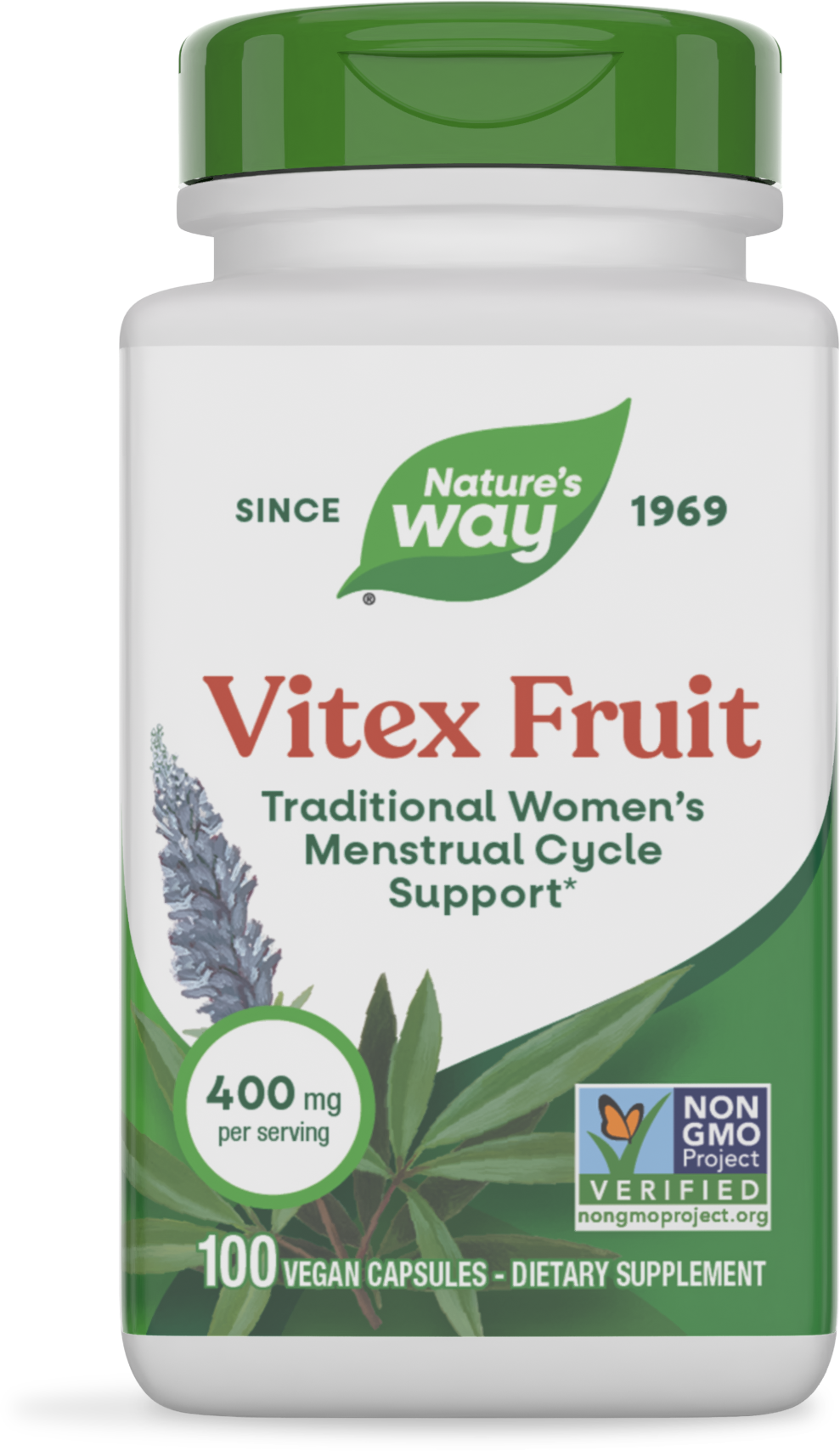
Vitex (Chasteberry) 400mg
The most studied herbal supplement for PMS and cycle regulation. Vitex agnus-castus has moderate evidence for reducing PMS symptoms (breast tenderness, mood, bloating) and may help with luteal phase defects. The evidence is better than most hormonal supplements but still limited by small study sizes.
62/ 100
Our Verdict
Solid Choice
Vitex earns the highest score in the hormonal balance category because it has the most clinical evidence, including a systematic review, multiple RCTs, and German Commission E approval. The evidence is moderate but real, unlike most hormonal supplements. Minor hype penalty for 'hormone balancing' claims that oversimplify the mechanism. The product is affordable and has a reasonable safety profile. Best used for PMS rather than broad 'hormonal health.'
Key Findings
- Strongest evidence among herbal PMS supplements (systematic review, multiple RCTs)
- German Commission E approved for PMS and menstrual irregularity
- Works via dopaminergic effects on pituitary -- reduces prolactin, supports progesterone
- Takes 2-3 menstrual cycles to assess benefit -- not immediate relief
Evidence Analysis
Vitex agnus-castus (chasteberry) has the strongest evidence base among herbal supplements for premenstrual syndrome (PMS). A systematic review (van Die 2013) found moderate evidence supporting efficacy for PMS symptom reduction. The BNO 1095 extract was studied in an RCT (Ma 2010, n=217) showing significant PMS symptom improvement versus placebo. A Cochrane review notes the evidence is suggestive but limited by study quality. Vitex is thought to work via dopaminergic effects on the pituitary, reducing prolactin and supporting progesterone production. German Commission E approved vitex for PMS and cycle irregularity.
Ingredient Breakdown
| Ingredient | Dose | Verdict |
|---|---|---|
| Vitex Agnus-Castus (Chasteberry) Extract | 400mg | Adequate |
True Cost Analysis
Properly Dosed -- What You Pay Is What You Get
Listed Price
$0.12/serving
$3.60/month at 1 serving/day
True Cost Per Effective Dose
$0.12/effective dose
$3.60/month for effective dosing
76
Value Score
Excellent value
Where It Falls Short
Clinical trials are mostly small and of moderate quality. Takes 2-3 cycles to assess benefit. Should not be used during pregnancy or with hormonal medications (oral contraceptives, HRT). The 'hormone balancing' narrative oversimplifies complex endocrinology. Not a substitute for medical evaluation of irregular cycles. Mechanism of action is not fully understood.
Best For
- Women with PMS symptoms (breast tenderness, mood changes, bloating)
- Those with suspected luteal phase deficiency (under medical supervision)
- Women who prefer herbal approaches for mild cycle irregularity
Not Ideal For
- Those taking hormonal contraceptives or HRT (potential interaction)
- Pregnant or breastfeeding women
- Women with PCOS (different mechanism -- vitex may not help)
- Anyone with severe menstrual disorders (see a gynecologist first)
Solid Choice
Solid Choice
Hype Penalty: -3 pts
Evidence
60Safety
70Value
78Formulation
58Transparency
60Checking live scoring engine...
$11.99100 servings
$0.12 per servingBiorank may earn a commission from qualifying purchases. This does not influence our scores or rankings.
Frequently Bought Together
Popular picks in Hormonal Balance